Hypertension, or high blood pressure, is one of the most common health issues among Indian seniors. According to the National Health Profile, nearly one in three Indians over the age of 60 suffers from it. Causes range from poor diet and lack of exercise to chronic stress, pollution, and genetic predisposition.
If left unmanaged, hypertension can lead to heart attacks, strokes, and kidney failure. But the good news? It’s highly manageable with simple lifestyle changes—especially with yoga.
Why Yoga is Ideal for Managing High Blood Pressure
Yoga isn’t just about bending or stretching—it’s a holistic wellness tool. For seniors, it offers a gentle, low-impact way to:
- Lower stress hormone levels
- Improve blood flow and heart rhythm
- Calm the nervous system
- Promote better sleep and digestion
Scientific studies from AIIMS and the Indian Heart Journal have shown that regular yoga practice helps reduce systolic and diastolic blood pressure naturally.
Medical Backing and Ayurvedic Support for Yoga in Hypertension
Modern cardiologists now work hand-in-hand with Ayurveda and yoga therapists. Herbs like Ashwagandha and Arjuna, along with mindful breathing and light yoga, help stabilize blood pressure.
Ayurveda emphasizes balancing the Vata and Pitta doshas—often aggravated in hypertension. Yoga becomes the ideal bridge between traditional healing and modern science.
Safety Tips Before Starting Yoga for Seniors
Before rolling out the mat, seniors should keep these in mind:
- Get a medical check-up first
- Use props like cushions, chairs, or blocks
- Avoid intense postures like headstands
- Focus on slow, deep breathing
- Never practice on a full stomach
Listening to the body is key. If dizziness or pain occurs, it’s best to stop and rest.
Easy Yoga Poses to Help Lower Blood Pressure
These poses are beginner-friendly and safe for most Indian seniors. Practice each one slowly, focusing on your breath and comfort—never pushing past your limit.
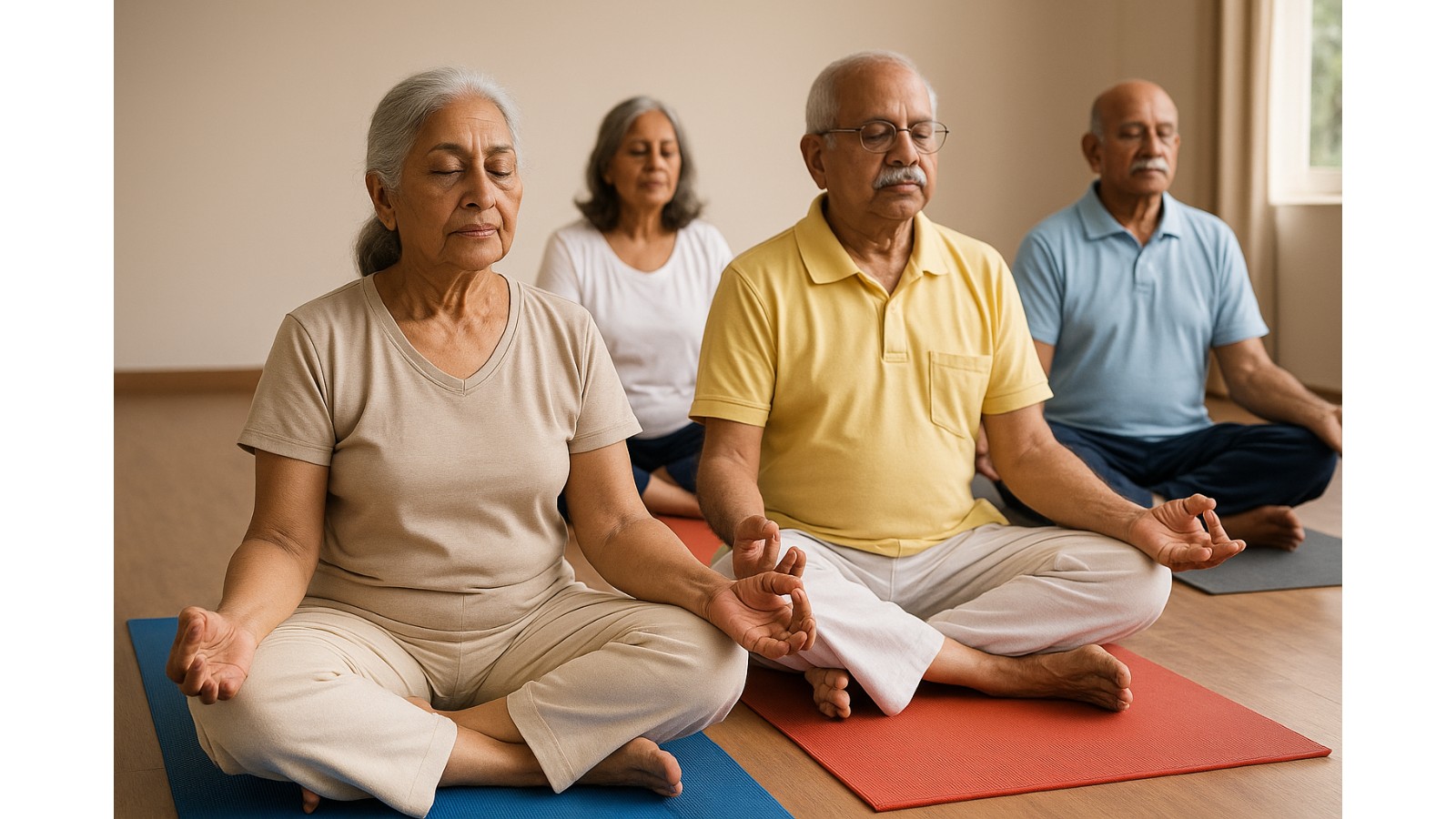
Sukhasana (Easy Pose) with Deep Breathing
How to do it:
- Sit cross-legged on a mat or cushion.
- Keep your back straight, hands resting on knees in Gyan Mudra.
- Close your eyes and inhale slowly for 4 counts, then exhale for 6 counts.
- Repeat for 5–10 minutes.
Benefits:
Calms the nervous system, reduces heart rate, improves oxygen intake.
Viparita Karani (Legs Up the Wall Pose)
How to do it:
- Lie on your back with your legs raised vertically against a wall.
- Keep your arms at your side, palms up.
- Use a pillow under your hips if needed.
- Stay in this position for 5–10 minutes.
Benefits:
Improves circulation, reduces swelling in legs, supports venous return to the heart.
Baddha Konasana (Butterfly Pose)
How to do it:
- Sit with your spine erect and bring your feet together, soles touching.
- Let your knees gently drop to the sides.
- Hold your feet and gently flap the knees like butterfly wings.
- Breathe deeply for 2–3 minutes.
Benefits:
Enhances blood flow to the pelvic and abdominal area, reduces stress.
Shavasana (Corpse Pose)
How to do it:
- Lie on your back, arms and legs relaxed and slightly apart.
- Close your eyes, and focus on relaxing every part of your body.
- Breathe naturally, observing each breath.
- Stay in this position for 10–15 minutes.
Benefits:
Lowers cortisol levels, reduces muscle tension, supports heart function.
Anulom Vilom (Alternate Nostril Breathing)
How to do it:
- Sit in a comfortable position.
- Use your right thumb to close the right nostril, inhale through the left.
- Close the left nostril with your ring finger, exhale through the right.
- Inhale through the right, then exhale through the left.
- Repeat for 5–10 rounds.
Benefits:
Balances blood pressure, improves oxygen flow, soothes the mind.
Creating a Daily 20-Minute Yoga Routine
Here’s a sample plan:
| Time | Activity |
|---|---|
| 0–3 min | Sukhasana with deep breathing |
| 3–5 min | Anulom Vilom |
| 5–10 min | Baddha Konasana |
| 10–15 min | Viparita Karani |
| 15–20 min | Shavasana |
Consistency matters more than perfection. Even 15–20 minutes daily can help reduce BP levels over time.
The Role of Diet and Lifestyle with Yoga
Yoga works best alongside a supportive lifestyle:
- Eat light, home-cooked meals rich in vegetables, garlic, and whole grains.
- Reduce salt and processed foods.
- Include daily walks of at least 20–30 minutes.
- Avoid excessive screen time and maintain regular sleep cycles.
Common Mistakes to Avoid While Practicing Yoga
- Skipping warm-up or cool-down
- Holding breath unconsciously
- Ignoring body signals or pain
- Comparing progress with others
- Practicing on a full stomach
Yoga is not a competition—go at your own pace.
Success Stories: Indian Seniors Who Beat Hypertension with Yoga
Mrs. Usha Mehta, 68 (Delhi): After a minor stroke scare, she took up yoga on her doctor’s advice. Within 6 months of daily practice and dietary changes, her BP dropped from 160/100 to a stable 130/85.
Mr. Ananda Rao, 72 (Hyderabad): Practicing Shavasana and Pranayama for a year helped him reduce his medication dosage. “Yoga gave me back my energy and focus,” he says.
Government and NGO Support for Senior Yoga Programs
The Ministry of AYUSH conducts International Day of Yoga programs and runs senior wellness centers. NGOs like The Yoga Institute and Art of Living also offer low-cost or free sessions tailored for older adults.
Check with local community halls, parks, or senior citizen groups in your area.
Is yoga safe for all seniors with hypertension?
Yes, but always consult your doctor and start with beginner-level poses.
How soon can I expect results?
Most seniors notice benefits within 4–8 weeks of consistent practice.
Can I do yoga with arthritis or knee pain?
Yes—opt for seated or supported poses and avoid kneeling postures.
What’s better: yoga or walking?
Both are excellent. Combine them for optimal heart and lung health.
Can I do yoga on the bed or chair?
Absolutely! Many seniors use chairs or soft beds for seated breathing or stretches.
Should I join a class or practice at home?
Beginners benefit from guided sessions, but home practice works great too after basic learning.
Conclusion
Yoga for hypertension relief is simple, effective, and culturally familiar—especially for Indian seniors. Whether it’s five minutes of mindful breathing or a full 20-minute sequence, these small steps can bring big changes.
So, unroll that mat (or sit on a chair!), take a deep breath, and let yoga gently guide you toward better heart health.